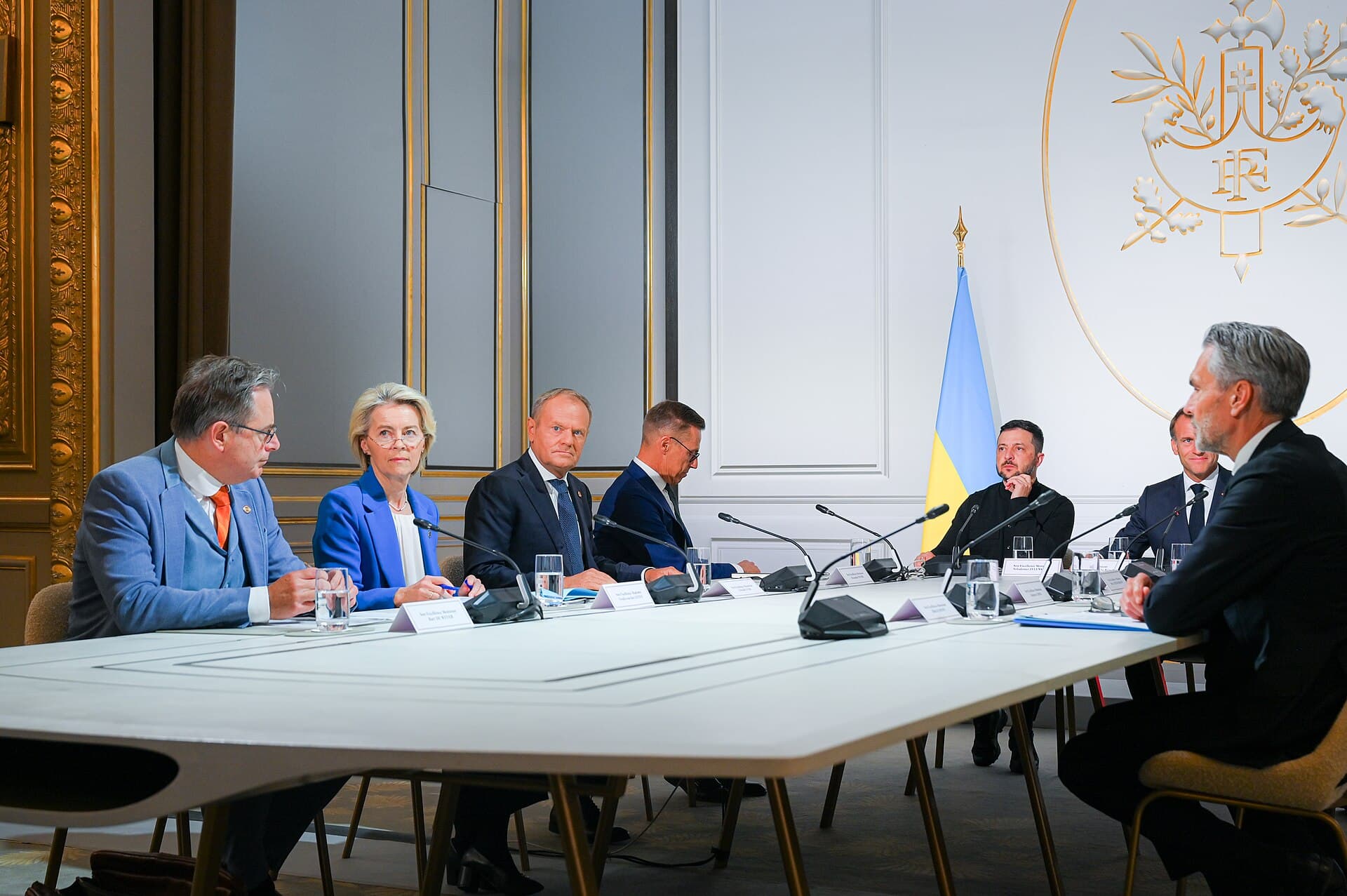
French President Emmanuel Macron and Polish Prime Minister Donald Tusk met in Gdansk on Monday to discuss how Poland might contribute to France's nuclear deterrence strategy, in a meeting that underscored a broader push to integrate Eastern European military capacity into Western European defence architecture.
The two leaders held talks in the Baltic port city — located roughly 150 kilometres from the Russian exclave of Kaliningrad — on areas including early warning systems and air defence as potential Polish contributions to French nuclear deterrence. France, however, made clear it would retain full and sole authority over any decision to use its nuclear arsenal. The summit built on a treaty of friendship and enhanced cooperation signed by France and Poland in May 2025.
According to France 24, the two governments also agreed to enter into a partnership on a joint military communications satellite project, to involve French, Polish, and other European operators — a concrete step toward deeper interoperability between their armed forces.
Poland's growing military weight
The talks come as Poland has emerged as one of NATO's most significant military spenders. Warsaw's defence expenditure is expected to exceed 4.8 percent of GDP in 2026, among the highest in the alliance. Poland has already placed orders for American F-35 fighter jets, Apache attack helicopters, Patriot missile defence systems, and Abrams main battle tanks, cementing its position as a front-line state with substantial conventional military capacity.
Tusk's government, which came to power following an electoral victory in 2023, has positioned itself firmly within the European mainstream on defence — a contrast to the approach of neighbouring Hungary under Viktor Orbán.
The transatlantic backdrop
The Gdansk meeting took place against a shifting transatlantic landscape. US President Donald Trump has repeatedly questioned American commitments to NATO and the broader Atlantic alliance, prompting European capitals to reassess their security arrangements.
Tusk addressed the changed environment directly at a press conference. "Washington's strategy has indeed changed," he said, while also stressing that "Polish-American and Euro-American relations remain very important." On the broader shared vision between Paris and Warsaw, he added: "We have very similar views on how to build Europe's strength, the sovereignty of Poland, of France, and of Europe."
The choice of Gdansk as the venue carried its own symbolism. The city's shipyards gave birth to the Solidarnosc movement, which ultimately contributed to the end of Soviet rule across Central and Eastern Europe — a historical backdrop that lent weight to discussions about European sovereignty and collective security in the present day.