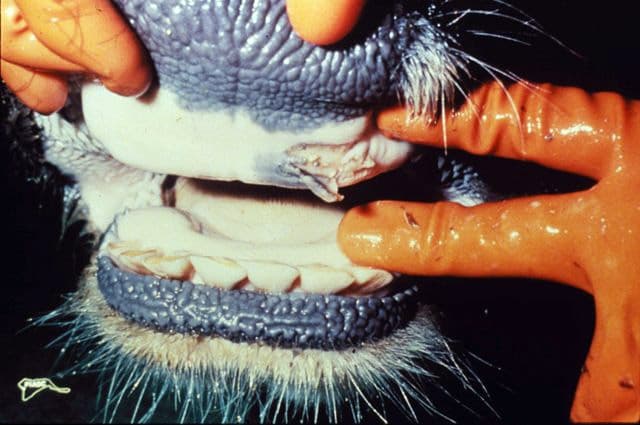
Negligent animal movement practices are the primary driver behind the spread of foot-and-mouth disease (FMD) into new areas of Cyprus, according to Stavros Malas, head of the government's special scientific committee. The transmission of the virus into the Nicosia district remains under investigation, though early indications point to failures in basic biosafety protocols during livestock handling.
Negligence in animal handling
Malas pointed to a clear pattern of careless practice as the mechanism behind the outbreak's geographic spread.
"When you move lambs and goats and don't do proper disinfection and you go and load piglets, leaving a small outbreak behind and you leave the problem behind. And piglets are more vulnerable,"he said, as reported by Cyprus Mail. The committee has also identified structural problems in the way livestock areas have been organised, concluding that these conditions allowed the disease to take hold more severely than it otherwise would have.
Scale of positive results
Of approximately 490 units analysed, 101 returned positive results for FMD — a rate Malas described as broadly in line with projections.
"It's close to 20-22%, it's roughly the percentage we expected,"he said. Foot-and-mouth disease is classified by the EU as a Category A disease, the most serious tier, carrying strict mandatory response obligations. Veterinary services have defended the policy of universal culling, stating:
"Universal culling is not an option, but a legal obligation, which applies to all farm animals and not just those with positive clinical or laboratory findings."
Rebuilding on local breeds
Looking ahead to restocking, Malas indicated that the committee is not focused on sourcing animals from abroad.
"The commission is only discussing the domestic market. We believe that the best way is to build livestock farming on the basis of local breeds, which are also more resilient,"he said. The republic's stated goal remains the full elimination of the FMD virus.
Compensation delays and farmer concerns
A €28 million compensation package has been approved, and farmers whose animals were culled before Easter have received advance payments. However, the initial payment of €20 per animal to sheep and goat farmers has not been followed up. Panikos Kaponas, spokesman for the sheep and goat farmers' coordinating committee, said simply that
"the matter has stalled at that point."
Pig farmers face a broader crisis of confidence. Petros Kailas, president of the Pancyprian pig farmers association, warned that rebuilding the sector will be difficult:
"It is not easy to re-enter an industry where you do not know when you will face such outcomes again."He also cautioned that divergent disease management strategies on the island — with Turkish Cypriot farmers choosing to vaccinate and, in his words, "live with the virus" — mean it is
"only a matter of time before the virus spreads again from the north."