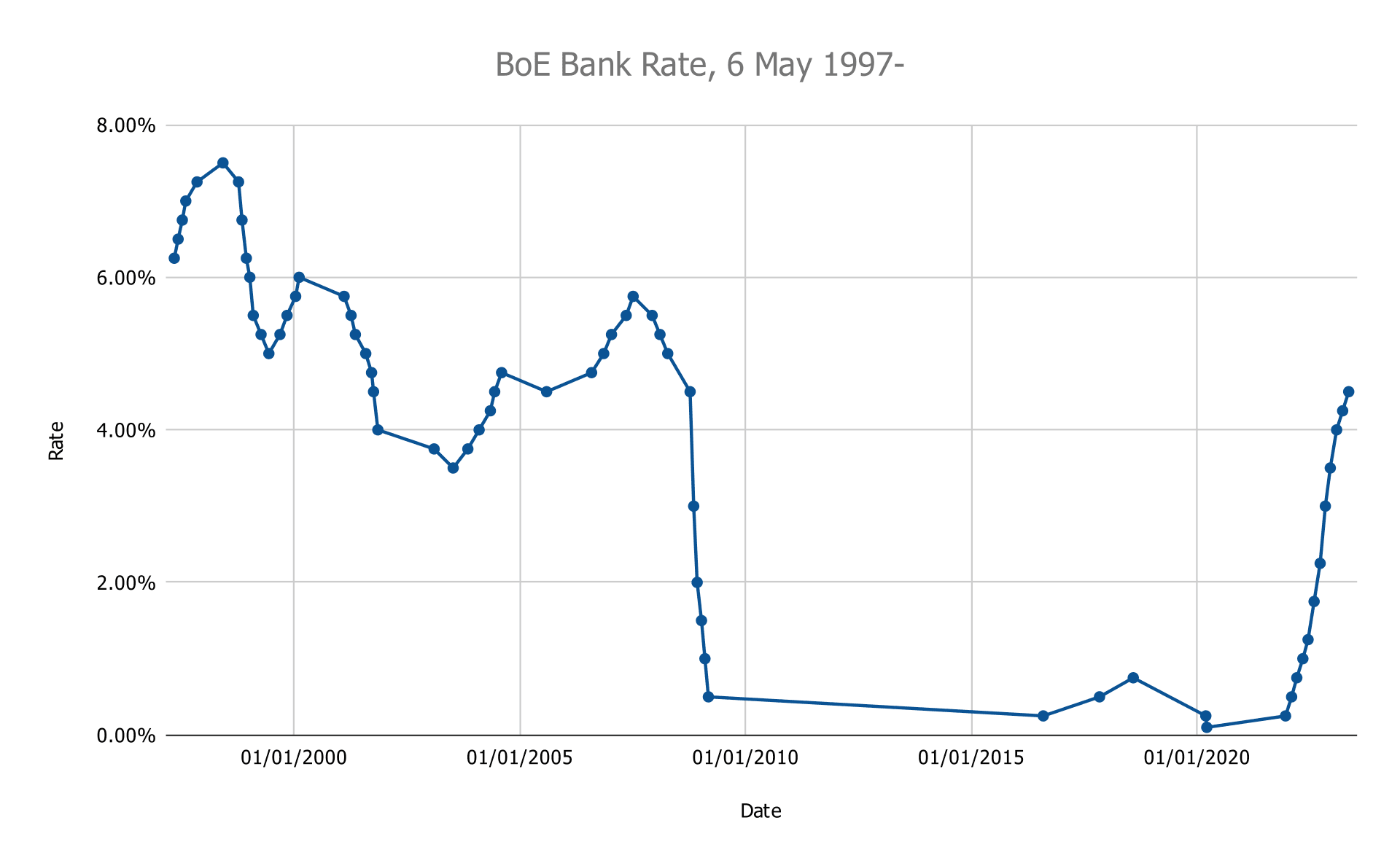
The Bank of England kept its benchmark interest rate unchanged at 3.75% at its March policy meeting, with all nine members of the Monetary Policy Committee (MPC) voting unanimously to hold — a result that caught markets off guard and pushed rate-cut expectations further out for the year.
A Hawkish Surprise
While the decision to hold was broadly in line with forecasts, the absence of any dissent proved more significant. According to the Financial Mirror, markets had anticipated at least some MPC members would vote in favour of a cut, making the unanimous stance a notable hawkish signal. In response, expectations for rate hikes later this year were revised higher following the announcement.
Inflation Forecast Overshoots Target
Central to the MPC's caution is a deteriorating inflation outlook, driven in part by geopolitical instability. The Bank's statement pointed to uncertainty stemming from the ongoing conflict in the Middle East, which is exerting upward pressure on energy prices and is expected to feed through to broader consumer prices in the coming quarters.
The Bank's internal projections indicate inflation will rise to around 3% in the second quarter of 2026, climbing further to as high as 3.5% in the third quarter — well above the Bank's 2% statutory target. The figures make a near-term rate cut increasingly difficult to justify.
Growth Remains a Complicating Factor
Despite the hawkish tone on inflation, the Bank acknowledged that economic growth remains subdued. GDP in the first quarter is estimated at between just 0.1% and 0.2%, creating a difficult policy trade-off between curbing inflation and supporting a sluggish economy.
Governor Andrew Bailey noted that the economy still has spare capacity, suggesting that if demand remains weak, some inflationary pressures may be naturally contained — a caveat that leaves the door open to future easing, should conditions allow.
Global Context: Fed Also Holds Firm
The BoE's decision closely followed that of the United States Federal Reserve, which on Wednesday kept its own rate in the 3.50–3.75% range. Fed Chair Jerome Powell underscored that further progress on inflation would be required before any rate reductions are considered, reinforcing a broader higher-for-longer narrative across major central banks.
Together, the two decisions reflect a shared reluctance among leading monetary authorities to ease policy prematurely, with inflation risks — both domestic and geopolitically driven — continuing to dominate the outlook.